Brass items have a warm golden glow and a timeless charm that’s hard to beat but often end up tarnished as the years roll by. Many people wonder, can vinegar clean brass? This natural oxidation dulls their shine and gives them an older, sometimes grimy look, which is why individuals often grab simple budget-friendly cleaning solutions like vinegar because it’s easy to find and use.
Getting to Know Brass and What Makes It Truly Stand Out
Brass is an alloy mainly made of copper and zinc with the mix varying depending on what it’s used for. This blend gives it a bright gold-like shine that really stands out. Over time brass tarnishes because the copper reacts with oxygen, moisture and pollutants in the air. This reaction slowly builds up a dull patina or unmistakable greenish layers. These changes usually don’t harm the metal itself but can mask its natural glow. When brass meets acidic substances like vinegar its surface chemistry changes. Acids can clean off oxidation and dirt.
How Vinegar Works Its Magic: Can Vinegar Clean Brass?
Vinegar contains acetic acid, a mild yet mighty acid that’s good at breaking down stubborn mineral deposits and dirt. When you use it on brass, this acidity dissolves oxidized layers and revives the metal’s shine by clearing away gunky buildup.
White vinegar is the trusty workhorse for cleaning thanks to its clear color and balanced acidity around 5-7% acetic acid. It does a solid job without being too rough on surfaces, which is always a bonus.
Apple cider vinegar isn’t the first pick for brass but shares a similar acidity level. If you don’t rinse it well, you might be left with a lingering scent or some discoloration—nothing terrible but enough to notice.
Distilled vinegar is the pristine option free from impurities so it generally cuts down chances of stains or residue on your brass treasures.
There are stronger vinegars with higher acidity but they often act like a bull in a china shop — too harsh and likely to damage the metal’s surface.
Possible Risks When Applying Vinegar to Brass Surfaces
Vinegar often does a solid job as a cleaner but its acidity can be a double-edged sword if you’re not careful. Leaving vinegar on brass for too long or using it too frequently might lead to corrosion, dull the shine or cause stubborn discoloration.
"Acidic cleaners like vinegar can do the trick, but you’ve got to handle them with kid gloves when it comes to delicate metals like brass—otherwise, you might end up with some unwanted etching or permanent damage. I’ve found it’s always wise to do a quick spot test first, and definitely don’t let the cleaner linger too long." – Metalcare Specialist
Step-by-Step Guide to Safely Cleaning Brass with Vinegar (Because Who Wants Dingy Brass Anyway)
1
Prepare your workspace: Lay down some cloth or old newspaper to keep your surfaces safe from any pesky spills. Slip on a pair of gloves too—your skin will thank you for it later.
2
Test a small area first: Dab a bit of diluted vinegar on a hidden spot just to make sure it won’t cause any unexpected discoloration or drama.
3
Mix the vinegar solution: Combine equal parts white vinegar and warm water. If the tarnish is being particularly stubborn, toss in a pinch of salt to amp up the cleaning power.
4
Apply gently: Dip a soft cloth or sponge in your concoction and give the brass a gentle rub. Resist the urge to scrub like mad—that can leave scratches nobody wants.
5
Rinse thoroughly: After cleaning, run the brass under warm water to wash away any lingering vinegar that might otherwise keep sneaking in to corrode the metal.
6
Dry completely: Grab a microfiber or soft towel and dry off the brass fully. Leaving any wet spots around is basically an open invitation for faster tarnishing.
7
Polish for shine: Buff the piece with a brass polishing cloth or a tiny dab of olive oil—this little trick can really bring back the sparkle while adding a nice protective layer.
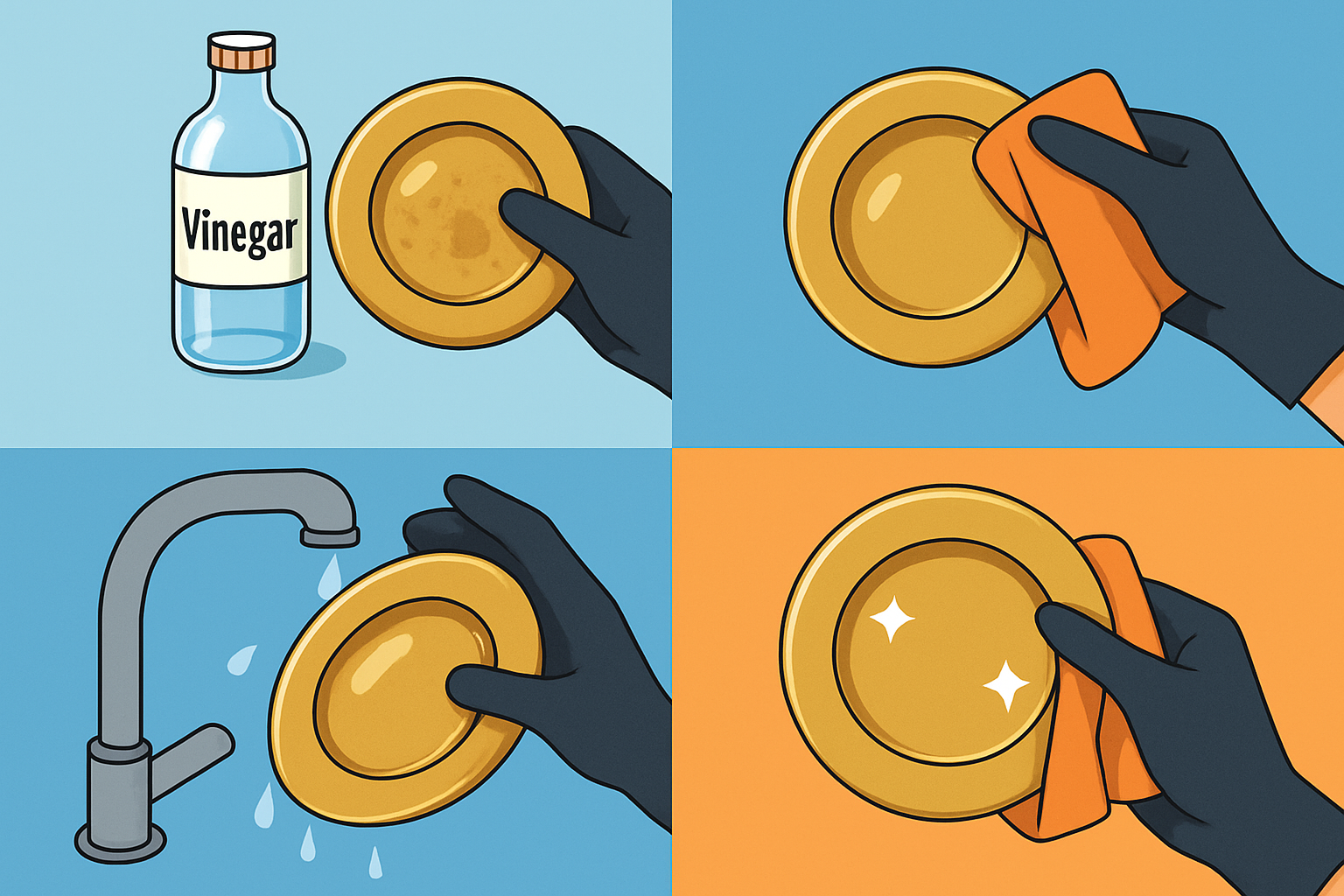
Visual guide illustrating how to safely clean brass with vinegar: preparation, application, rinsing, and polishing steps
Other Cleaning Options If You’d Rather Give Vinegar a Pass
If you are uneasy about vinegar’s acidity or your brass pieces have delicate finishes, you might want to try a few kinder cleaning methods. These alternatives usually pack less punch and can do a better job depending on the kind of brass or how stubborn that tarnish is.
Mixing lemon juice with baking soda creates a mild abrasive paste that can brighten brass without harsh chemicals.
Commercial brass cleaners are made to safely tackle tarnish and often include protective coatings that slow future oxidation, giving your brass a fighting chance.
For everyday upkeep, mild soap with warm water and a soft cloth usually does the trick and keeps buildup at bay.
Polishing cloths treated with wax or oils not only restore the gleam but also add a protective layer after cleaning, which helps keep things sparkling longer.
Ammonia-based cleaners can do a solid job but must be used with caution. Good ventilation is a must and avoid lacquered brass to prevent damage.
Tips for Caring for Brass After Cleaning (Because Your Shine Deserves a Little TLC)
To keep your brass looking bright and shiny longer, it’s best to store it in a dry place away from humidity and direct sunlight. While you might wonder if can vinegar clean brass, applying protective coatings like clear lacquer or natural oils usually does a solid job slowing down the inevitable tarnish.
As a researcher in digital wellness studies, she examines the intersection of technology and mental health, offering evidence-based strategies for thriving in our connected world.