Pressure washing brick surfaces is a go-to method for many looking to revive their brick’s original charm by removing dirt, grime and stubborn mildew. Many homeowners wonder if it’s possible to pressure wash brick without causing damage. Yes, pressure washing can clean bricks well but requires a gentle touch to avoid wearing down the surface or damaging the mortar.
Getting to Know Brick as a Material A Little Love Letter
Bricks come in several types—clay, concrete and engineered—and they vary in porosity and hardness. Typically bricks are porous and tend to soak up water like a sponge. This unfortunately makes them vulnerable to high-pressure water jets. The mortar joints holding the bricks together are often more fragile than the bricks themselves.
Is It Really Possible to Pressure Wash Brick Without Doing Damage? Key Points You’ll Want to Keep in Mind
You can pressure wash brick safely but it really comes down to a few key factors like the type and age of the brick and the condition of the mortar. How you go about the pressure washing also matters. Push the pressure too hard or use the wrong technique and you’re asking for trouble—surface erosion or mortar damage to be exact.
Older bricks and worn mortar tend to take a beating more easily when faced with pressure washing. They’re a bit more delicate if you will.
Soft or porous bricks can start to wear away faster than you would hope under a strong blast of pressure—like a sandcastle against the tide.
It’s a good idea to patch up any damaged or missing mortar joints before washing. It saves headaches down the line.
Keeping pressure below 1500 psi is usually the sweet spot to avoid doing more harm than good.
Using wide-angle nozzles is a clever trick because they spread the force out and help shield the surface from erosion.
Harsh chemical cleaners paired with pressure washing can weaken both bricks and mortar over time, so it pays to be cautious.
Getting Ready to Pressure Wash Brick with These Essentials
Before you dive into pressure washing it is smart to prep carefully so you don’t cause more harm than good. That means examining the bricks and mortar for weak spots that might crumble under pressure, clearing the workspace thoroughly, and choosing the right settings on your equipment.
1
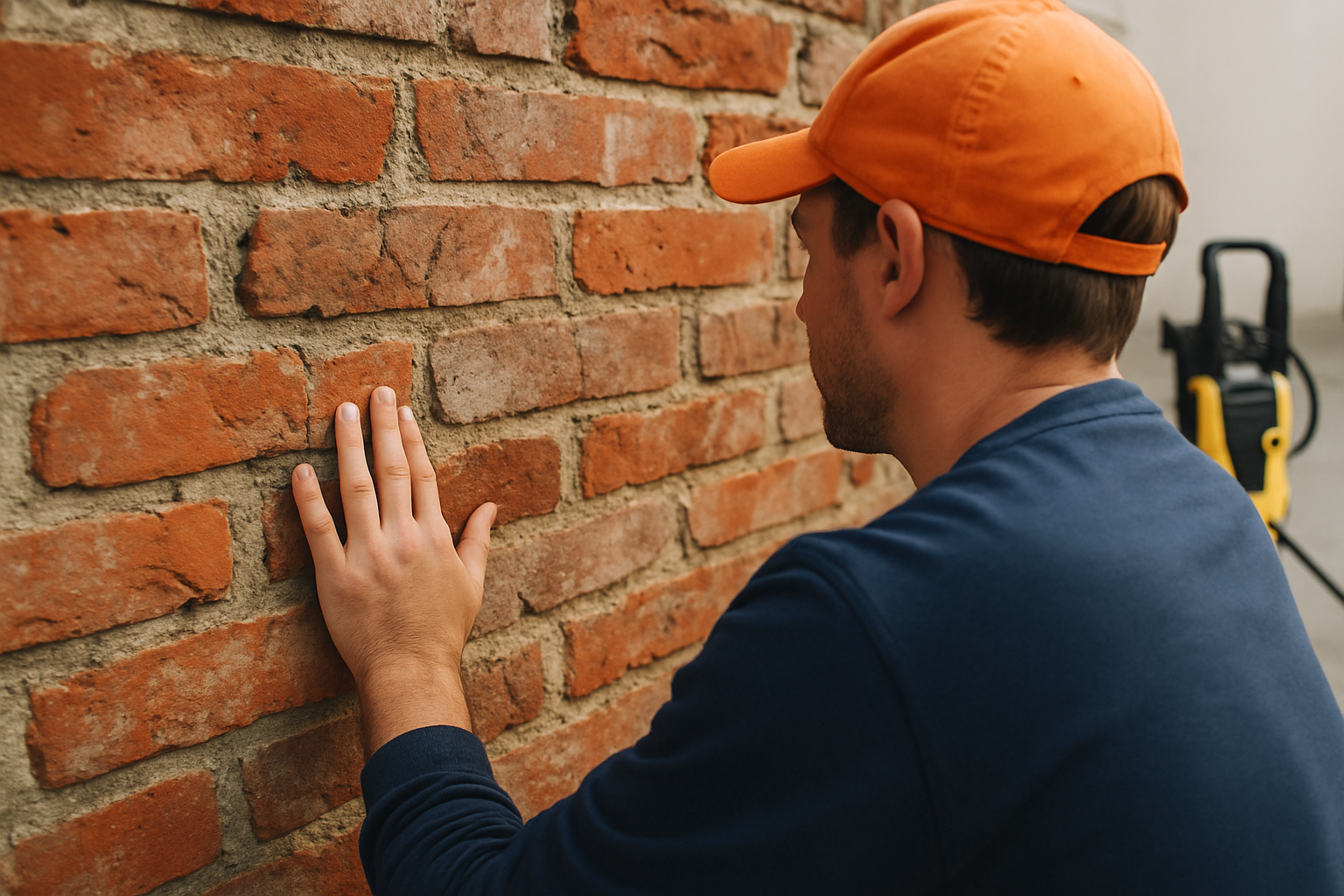
Take a careful look at your bricks and mortar for any cracks or signs of water damage because once you start pressure washing those problems could get worse.
2
Always test a small spot first to make sure the pressure and cleaning solution work well with your brick and mortar — better safe than sorry.
3
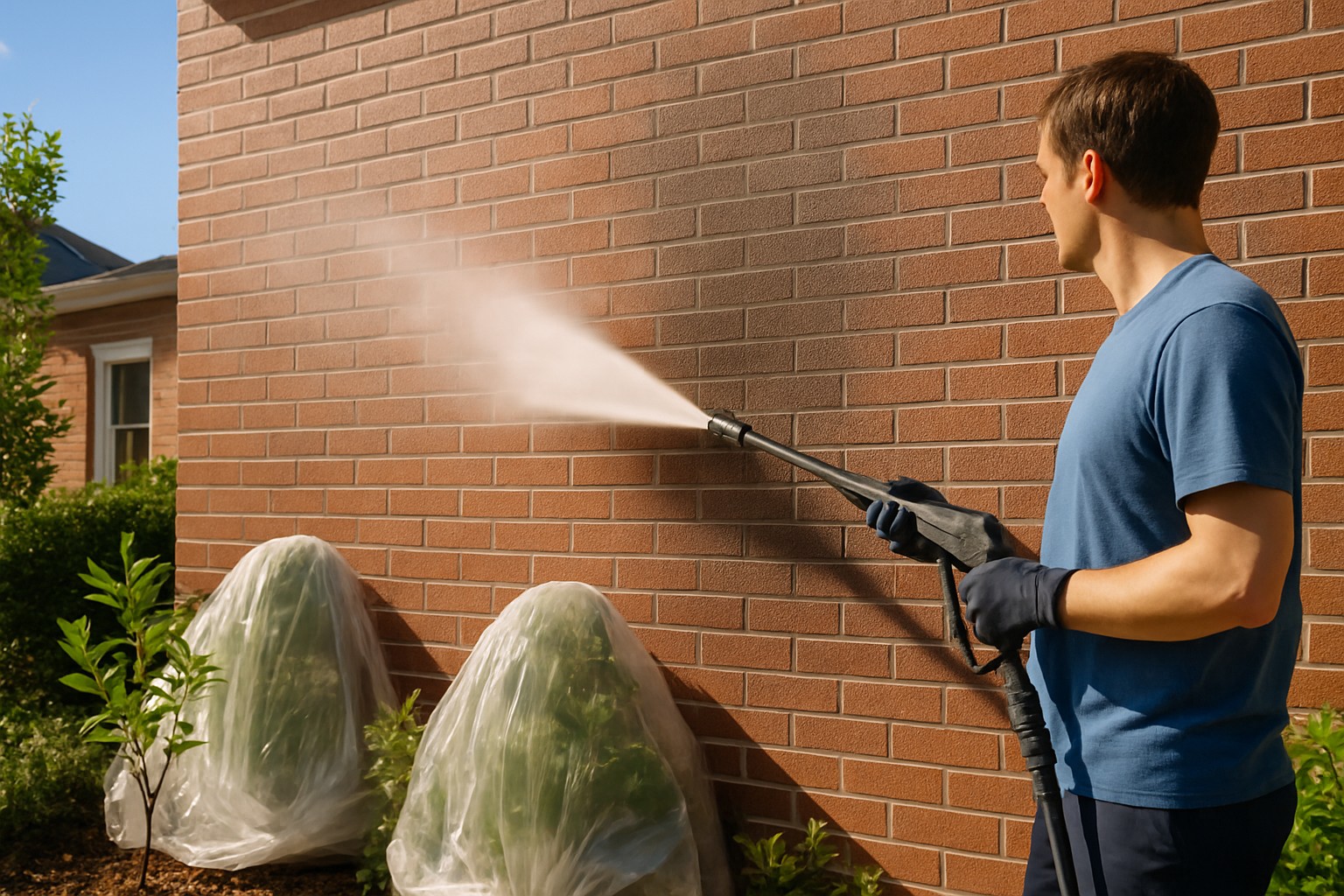
Wrap your plants, electrical fixtures, and windows with plastic sheeting or tarps to keep them safe — it’s extra effort that pays off.
4
Stick to a wide-angle nozzle (25° or 40°) and keep your pressure washer under 1500 psi to avoid damaging your walls.
5
Don’t forget your protective gear — gloves, goggles, and sturdy shoes — because staying safe while working is no joke.
Inspecting brick and mortar carefully before pressure washing is essential to avoid damage.
Your Go-To Step-by-Step Guide for Safely Pressure Washing Brick
Taking a careful step-by-step approach to cleaning helps bring the brick's original charm back to life while keeping it safe. The trick is to keep the water pressure in check, maintain a good distance and avoid blasting the mortar lines with high-pressure sprays.
1
Hook up your pressure washer and lower the pressure to 1500 psi or less. This simple step helps protect the fragile brick and mortar from damage.
2
Choose a wide-angle spray nozzle of either 25° or 40° so the water pressure spreads evenly instead of blasting one spot like a fire hose.
3
Start spraying from about 12 to 24 inches away. Keep the wand moving steadily to avoid focusing on a single spot and causing damage.
4
Work in manageable sections by spraying horizontally and moving upward. This method prevents streaks and keeps your brick looking sharp.
5
Avoid spraying directly at the mortar joints because washing out that important material can compromise the wall’s integrity.
6
After you are finished, rinse the brick well with a gentle spray to wash away leftover detergent or loosened grime. Your bricks will appreciate it.
Other Ways to Clean Brick Besides Pressure Washing (Because Sometimes You Need a Gentle Touch)
If the thought of pressure washing older or delicate brick makes you nervous, don’t sweat it—there are plenty of gentler ways to freshen up brick surfaces.
Soft washing means using low-pressure water teamed up with specially formulated cleaning solutions to gently nudge dirt and grime right off, no harsh scrubbing needed.
A simple vinegar and water mix usually does a neat job breaking down mineral buildup and light stains, all while playing nice with brick surfaces.
The trusty mild detergent plus water combo, worked in with a firm nylon brush—this duo cleans thoroughly without ever calling in the big guns with high pressure.
Cleaners made just for brick zero in on mold and efflorescence, carefully avoiding any harsh chemicals that might rough up the brick or mortar.
For lighter touch-ups, a garden hose with an adjustable nozzle typically delivers just enough rinsing power to get the job done without any accidental damage.
Frequent Mistakes to Watch Out for When Pressure Washing Brick (Been There, Done That!)
Many homeowners unintentionally cause damage by skipping vital steps during pressure washing.
Cranking the pressure above 1500 psi usually ends up stripping finishes and wearing down those softer bricks faster than you would like.
Holding the nozzle too close to the surface often results in patchy cleaning and can even cause some annoying surface pitting.
Using narrow nozzles puts all that water pressure into a tight beam, which ups the chances of accidental damage.
Ignoring the condition of the mortar is a risky move—it can easily wash away the weaker stuff and leave your wall in a bit of a pickle.
Skipping the all-important test patch means flying blind on how the bricks will react, making damage more likely.
Forgetting your goggles or gloves leaves you open to some unwelcome surprises from water and chemicals.
How to Keep Your Brick in Top Shape After Pressure Washing (Because It Deserves Some TLC)
After giving your brick surface a good clean, a common question is can you pressure wash brick, but it's just as important to stay on top of regular care to keep that fresh look intact and help it stand the test of time. A little routine checking and some simple protective measures can go a long way in cutting down dirt buildup and shielding both the bricks and the mortar from wear and tear.
Keep an eye out with regular inspections to catch mortar cracks or brick wear before they become a bigger problem.
Apply sealants made specifically for brick and mortar since they help keep water out and prevent stains.
Schedule gentle cleanings once a year to stop grime from building up. Think of it as a little spa day for your walls.
Don’t wait to repair damaged mortar because fixing it early keeps everything solid and sturdy.
Control moisture by ensuring proper drainage and try to avoid planting vines that cling to walls and hold dampness.