Granite is a popular pick for countertops and surfaces in homes, prized for its natural beauty and rugged strength. Many homeowners ask whether granite stains easily, which is totally understandable. This article dives into how granite really stands up to stains and clears up a few common myths.
Understanding Granite What It’s Made Of and What Makes It Truly Stand Out
Granite is an igneous rock that forms when magma cools slowly deep inside the Earth's crust. It is primarily made up of quartz, feldspar and mica. The way these minerals mingle plays a role in how porous the stone ends up being. This then affects how well it soaks up liquids and stains.
Granite is primarily made up of quartz, feldspar and mica minerals that contribute to its toughness and appearance.
Granite is quite dense but not completely impermeable because it contains tiny pores that absorb liquids to some extent.
A good-quality sealer fills those microscopic pores to reduce granite's porosity and provides a strong protective layer.
Whether the granite's surface has a mirror-like polish or a honed finish, the texture affects how quickly stains develop.
Does Granite Tend to Stain Easily? Clearing Up Some Common Misunderstandings
Many people assume granite is completely stain-proof but that is a bit of a stretch. Granite does a pretty good job at resisting stains, especially when you keep it well-maintained.
Granite is naturally tough as nails and pretty resistant to stains but not completely invincible. Since it’s a bit porous it can soak up liquids if left unsealed for a while.
Think of sealants as invisible shields that keep oils and spills from sinking into the stone’s tiny pores.
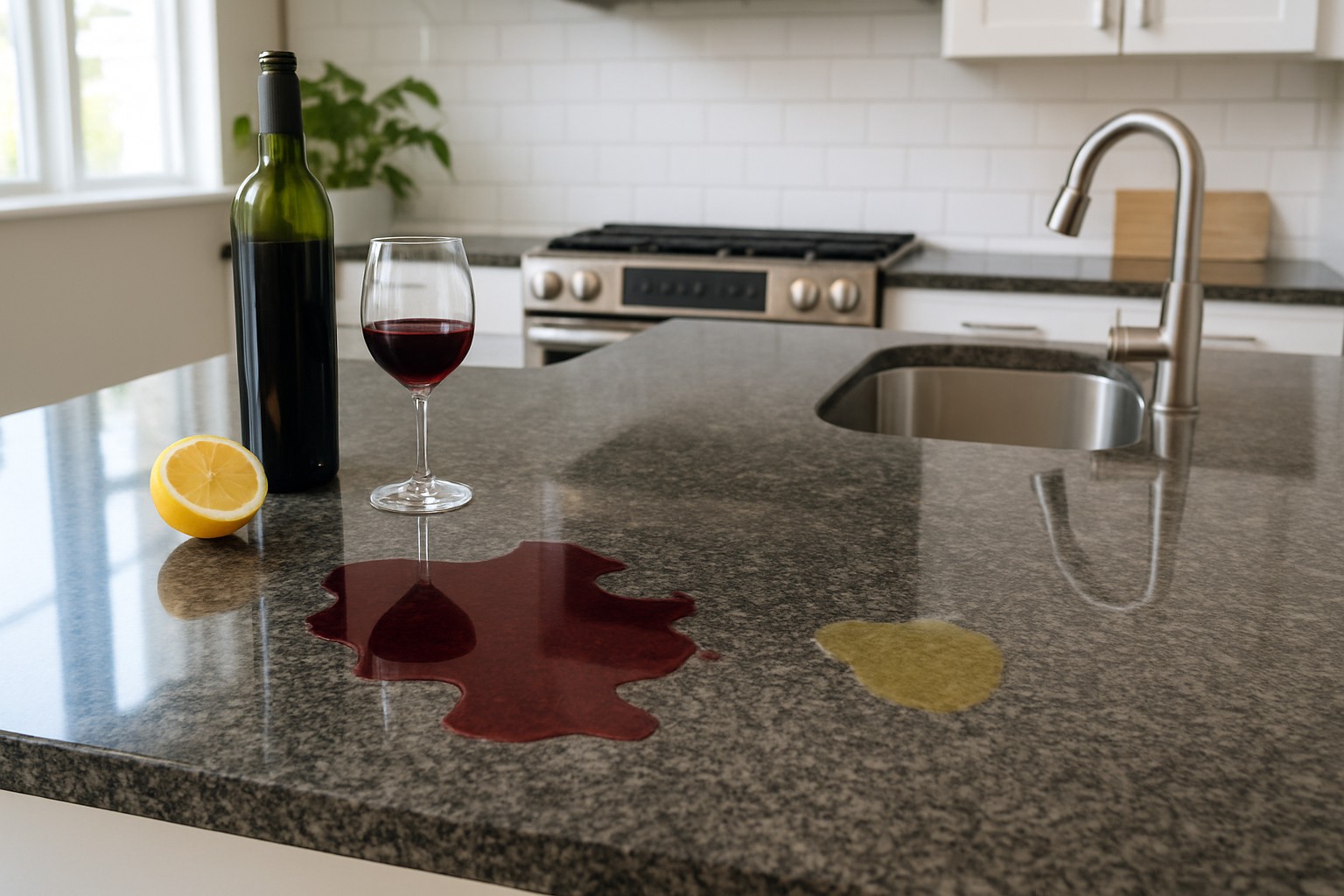
Acidic spills like lemon juice or wine can etch or stain granite if left too long, especially on unsealed spots.
Granite usually plays tougher and is less prone to staining than marble or limestone but still needs a little TLC to keep it looking sharp.
Common Sources of Stains to Keep in Mind (and Maybe Avoid When You Can!)
Granite is tough as nails, but a few everyday household items can sneak in stains if you don’t wipe them up pretty quickly.
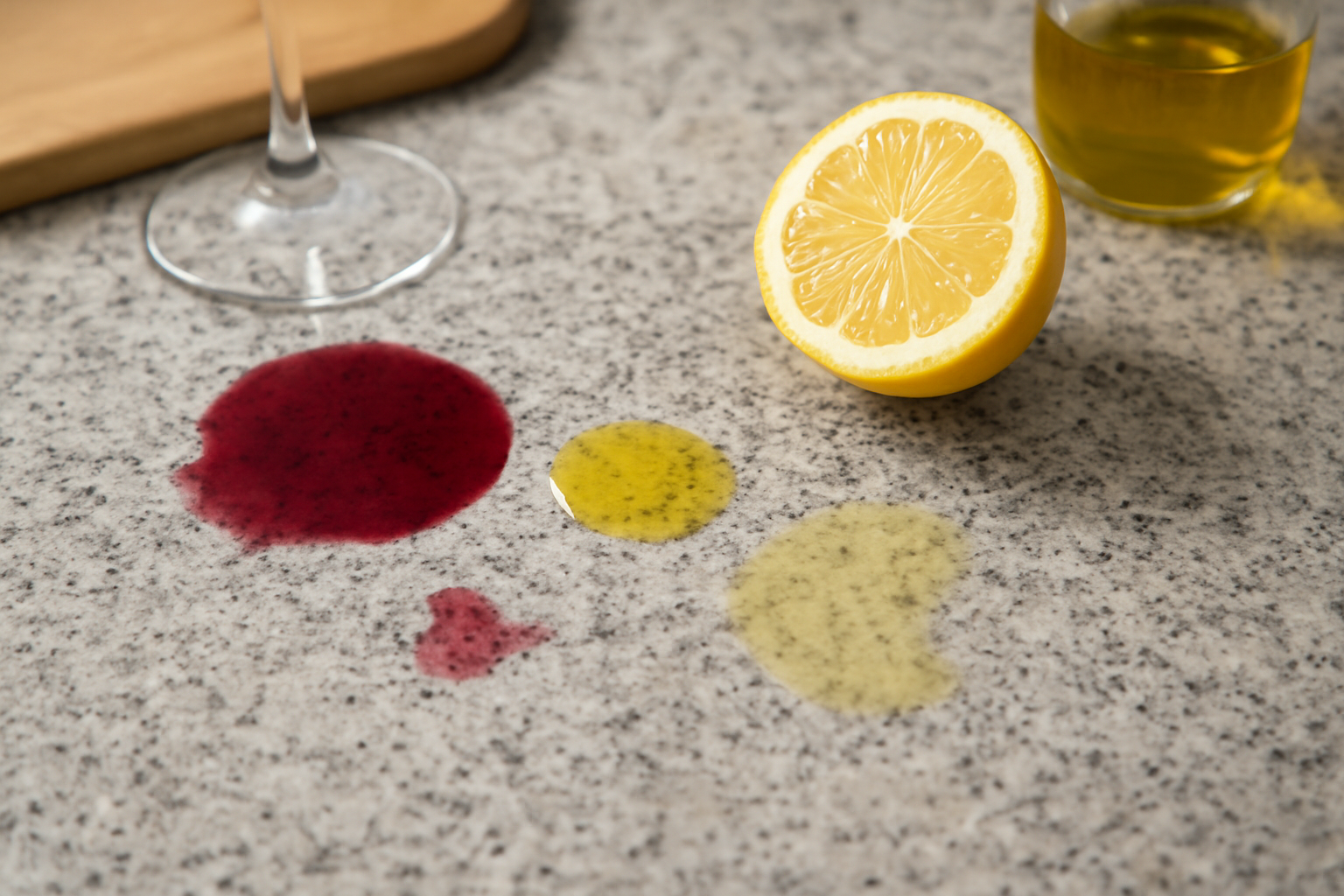
Red wine and coffee have a knack for leaving stubborn dark stains once they sink into the tiny pores of granite.
Oils from cooking or beauty products can seep in and leave greasy patches that are a real pain to remove.
Ink and dyes like those from markers or food coloring cling stubbornly to granite surfaces as if they made themselves at home.
Acidic culprits such as lemon juice or vinegar can damage the stone and leave its finish looking dull—definitely not what you want.
Hard water deposits leave behind white spots that usually need special cleaning magic to disappear.
Granite countertop showing common stain sources such as wine, oil spills, and acidic lemon juice drops
A Simple Step-by-Step Guide to Cleaning Granite That Actually Works
Cleaning granite the right way is absolutely key if you want to dodge those pesky stains and keep that natural shine truly glowing. I’ve found it’s best to stick with gentle, non-acidic cleaners on the regular to wipe away spills and everyday grime.
1
Start by brushing away any loose crumbs or dust with a soft microfiber cloth or a dry duster—think of it as giving your granite a little fresh breeze.
2
Whip up a gentle cleaning solution using a pH-neutral granite cleaner or mild dish soap mixed with warm water. Simple and effective.
3
Carefully wipe down the surface with a damp microfiber cloth soaked in that solution. Take your time so you don’t miss a spot.
4
Give it a good rinse with clean water to wash away any soap residue. Then dry right away with a soft towel to keep pesky water spots at bay.
5
Steer clear of harsh chemicals, bleach, vinegar or abrasive pads—they’ll dull or damage your granite’s beautiful finish faster than you’d like.
Techniques for Tackling Tough Stains (Because We’ve All Been There)
When stains refuse to budge with your usual cleaning routine there are still safe tricks to get them off without harming your granite. The best approach depends on the type of stain you have—oil, organic messes, ink blots or stubborn rust.
Oil-based stains usually take kindly to poultices made from a simple baking soda and water paste, left to dry on the stain and gently coaxing the grease out. It’s a neat little trick that tends to do the job.
Organic stains like coffee or wine often respond well when you carefully apply a bit of hydrogen peroxide—just enough to get the job done without overdoing it.
Ink stains can be quite the troublemakers and might need some extra TLC, like specialized stone-safe commercial products or a careful touch of acetone to avoid any damage.
Rust stains are a different beast altogether and generally call for professional-grade cleaners, since harsh treatments could easily mess up your granite’s natural beauty.
When home remedies won’t cut it, the smartest move is to chat with a stone care pro who can safely and effectively handle those pesky stains without any fuss.
Down-to-Earth Tips to Prevent Stains on Granite
Preventing granite stains usually works way better than trying to fix them down the road.
Schedule sealing every 1 to 3 years depending on your granite type and the quality of sealer you choose. This little maintenance pays off big time.
Always place coasters under glasses and put hot pots on trivets to avoid spots and heat marks that sneak in unnoticed.
Wipe up spills promptly with a soft cloth and gentle cleaner—the sooner you act the less likely stains will settle in.
Avoid acidic or abrasive cleaners because they can wear down the seal and leave your stone looking worse.
Check your granite surfaces regularly for signs of wear, dullness or stains so you can nip problems in the bud before they worsen.
Taking care of granite countertops means giving them a little regular TLC to keep them looking sharp and fend off any pesky stains as time goes by.
When You Should Re-seal Granite and Why It Really Matters
Re-sealing granite is like giving it a fresh coat of armor that renews the protective layer keeping liquids from sneaking in. You’ll know it’s time to re-seal when water soaks into the surface or dark spots show up, which raises the question: does granite stain? Water also refuses to bead like it used to. Usually the process is straightforward: clean the stone thoroughly, let it dry completely and then spread a good-quality granite sealer evenly—no shortcuts here.
Sealer Type
Durability
Pros
Cons
Approximate Cost
Recommended Use
Penetrating Sealers
1-3 years
Penetrates deep to shield those pores while keeping the stone’s natural charm intact – it’s like giving your granite a gentle hug
Needs a regular touch-up to stay effective
$30-$60
Perfect for most granite surfaces, especially in busy kitchens
Topical Sealers
6-12 months
Forms a protective barrier on top and adds a lovely shine that catches the eye
Can peel or shift color if neglected
$40-$70
Best suited for granite in low-traffic spots or purely decorative areas
Impregnating Sealers
2-4 years
Provides tough, long-lasting defense with solid resistance to oils and water — a real workhorse
Usually comes with a slightly higher price tag
$50-$80
Great for high-traffic zones like countertops where spills happen often
Natural Sealers
Varies
Eco-friendly and biodegradable, perfect if you’re trying to keep things green and clean
Typically not as durable, but that’s the trade-off
$20-$40
A smart pick for sensitive environments or households that cherish eco-conscious choices
Driven by a passion for culinary history, this food writer explores how ancient cooking techniques and forgotten ingredients can revolutionize modern home kitchens.