The common dilemma of fruit fly vs drain fly involves pesky intruders that show up in many homes and often crash the party in kitchens and bathrooms. They might be tiny and easy to mix up but figuring out which is which really matters when dealing with them for good. Their favorite breeding spots and habits don’t quite match. Using the wrong treatment can lead to wasted effort and frustration.
This article gives you a straightforward side-by-side comparison of fruit flies and drain flies. We will walk you through how to spot each one and dig into their biology, where they tend to hang out and their typical behaviors. Of course, we will also cover the smartest ways to keep them in check.
Taking a Closer Look at the Physical Appearance of Fruit Flies and Drain Flies
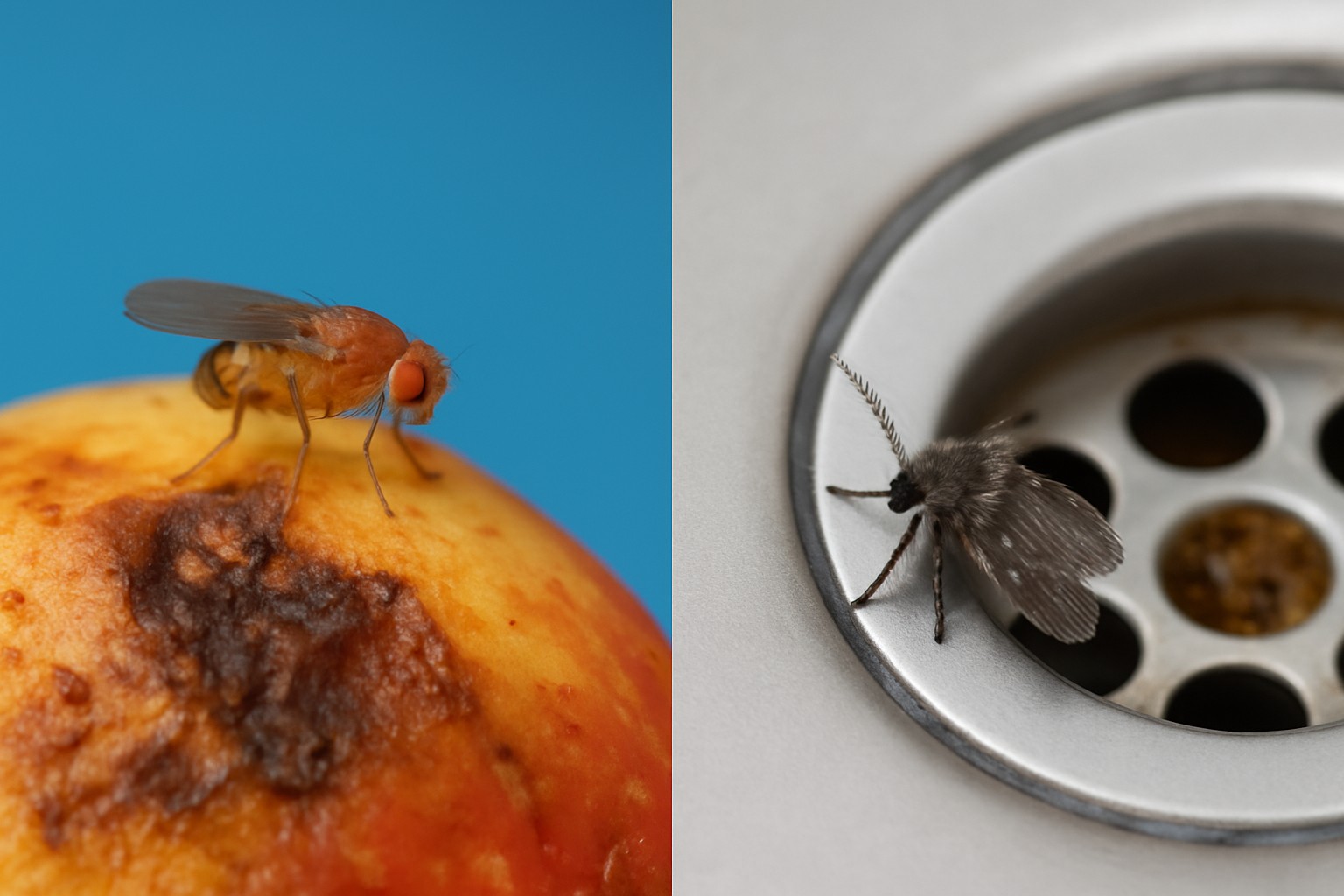
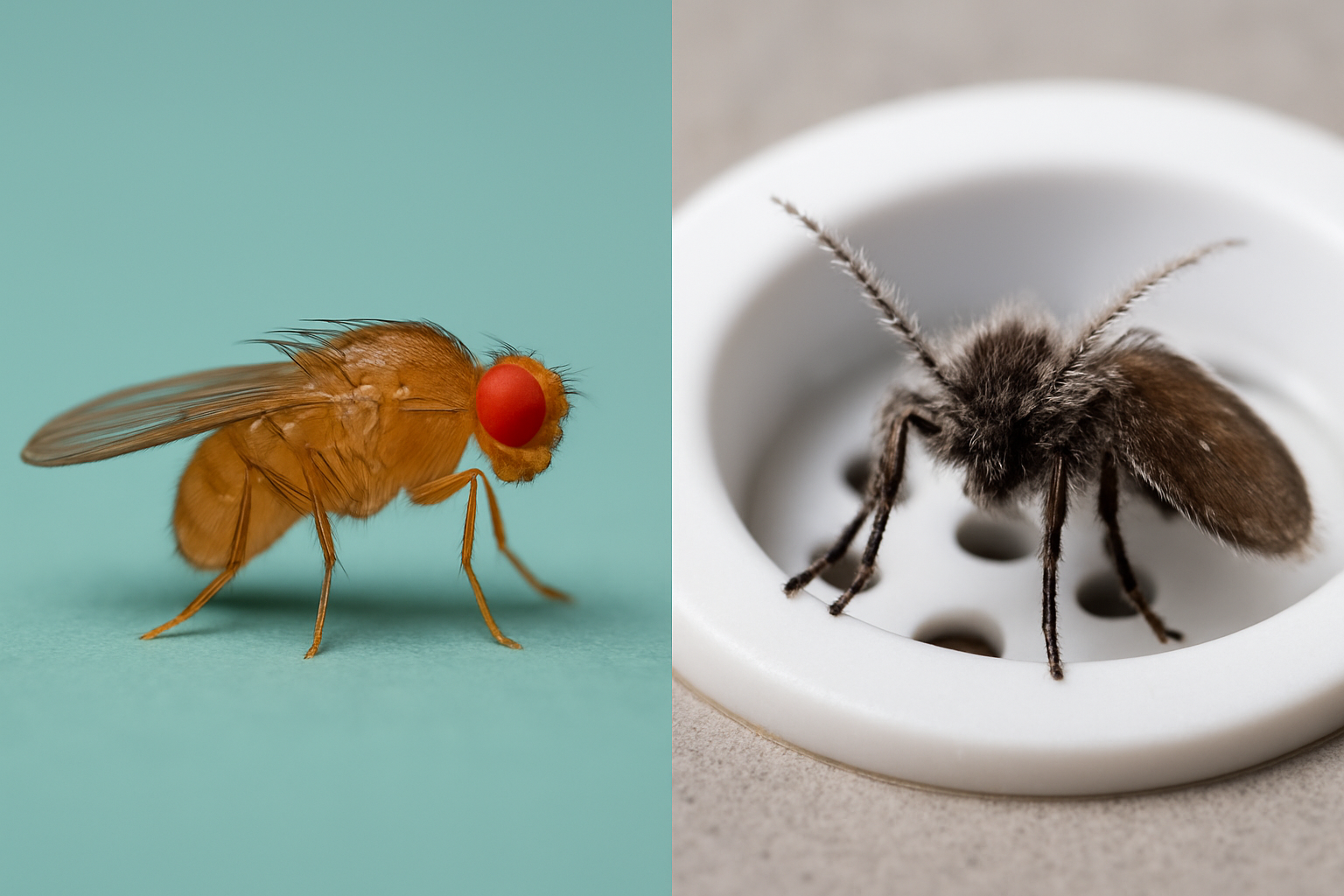
Both fruit flies and drain flies are tiny but a few details can help you tell them apart. Fruit flies usually measure about 1/8 inch long and have bright red eyes and tan or yellowish bodies. Drain flies are a bit bigger, around 1/6 inch, with fuzzy bodies and wings shaped like a leaf or a teardrop.
Side-by-side images highlighting physical differences between fruit flies and drain flies.
Feature
Fruit Fly
Drain Fly
Size
About 1/8 inch (3-4 mm) — pretty tiny, you might barely notice them buzzing around
Around 1/6 inch (4-5 mm) — just a tad bigger, enough to catch your eye if they are hanging out nearby
Body Color
Tan to yellowish with standout bright red eyes that almost look like little jewels
Gray to brown with a fuzzy body that gives off a slightly scruffy, well-lived-in vibe
Wings
Clear and smooth, usually held flat like they are ready for takeoff at any moment
Leaf-shaped wings covered with a hairy or fuzzy texture, almost as if they forgot to comb their feathers
Antennae
Short and feathery, kind of cute in their delicate little way
Long, draped with hair-like structures that make them look like they’re sporting a vintage ‘do
Body Texture
Smooth all over, sleek and streamlined — like they’re ready for the runway
Thick covering of dense, fuzzy hairs that gives them a cozy, woolly sweater kind of feel
Eye Color
Bright red eyes that practically glow in the right light
Dark brown to black eyes that blend into their fuzzy faces, adding to their mysterious aura
Habitat and Breeding Grounds where the magic begins
Fruit flies and drain flies tend to pick different spots to set up shop depending on their diet and breeding grounds. Fruit flies usually swarm around fermenting or rotting fruits and veggies. Drain flies are more drawn to the damp organic gunk lurking in drains, sewage and decaying plants.
Fruit flies usually show up and start breeding on overripe or rotting fruits and veggies left out on kitchen counters or forgotten in garbage bins. They have a radar for anything going bad.
Drain flies prefer to lay their eggs in the slimy organic buildup inside sink drains, floor drains, septic tanks and grease traps. Not exactly clean spots but it’s their idea of home sweet home.
Since these flies tend to thrive in very different environments, sanitation efforts really need to be tailored to each specific setting.
Differences in Behavior That Are Worth Noticing
Fruit flies and drain flies don’t just differ in looks. Their flight patterns and feeding habits are worlds apart. Fruit flies are little speedsters that buzz around mostly during the day with a fast and somewhat erratic dance, especially when there’s fruit or sugary treats nearby. Drain flies take it a bit easier by gliding slowly and often parking on walls or hanging out near drains.
Fruit flies often dart quickly between food sources zipping around with unmistakable quicksilver agility.
Drain flies on the other hand prefer to hover or flutter lazily sometimes just hanging around like they own the place.
Fruit flies are mostly attracted to sweet scents, alcohol vapors and ripe fruit—basically the life of the party—while drain flies gravitate toward moist decaying organic stuff and those dark damp corners you would rather forget.
Life Cycle and Just How Often They Reproduce
Knowing the life cycle and breeding habits of fruit flies and drain flies is key to keeping their numbers from getting out of hand. Fruit flies can zip from egg to adult in as little as 7 to 10 days when the conditions are just right, laying hundreds of eggs in fermenting fruit like they own the place. Drain flies take a bit longer—around 10 to 14 days—and prefer to lay their eggs in moist organic material, which is just their style.
Life Stage
Fruit Fly
Drain Fly
Egg
Eggs are laid on fermenting fruit and usually hatch within about 48 hours—pretty quick turnaround.
Eggs get deposited in those slimy drain layers and hatch in 2 to 3 days, hanging out in their goo until ready to go
Larva (Maggot)
Larvae chow down on fermenting material, growing over 4 to 6 days—nature’s little snackers.
Larvae feed on organic gunk, typically taking a slower 7 to 14 days to reach maturity—patience is a virtue here
Pupa
Pupation sticks around for 3 to 4 days, often right next to their food source—talk about convenience.
Pupae develop tucked inside organic debris for a good 6 to 8 days, cozy and hidden
Adult
Adults live for about 8 to 10 days and waste no time laying eggs soon after popping out of their pupal stage.
Adults hang around for up to 2 weeks, steadily laying eggs over time—it’s a busy life!
Reproduction Rate
Each female can lay as many as 500 eggs, turning any spot into a potential fruit fly party.
Females usually lay up to 300 eggs, enough to keep the drain fly population humming along.
Warning Signs of an Infestation That You Should not Ignore
Catching fruit fly or drain fly infestations early usually means spotting some telltale signs that differ depending on the species.
Catching sight of tiny flies buzzing around kitchen counters or fruit bowls filled with fermenting produce usually spells one thing: fruit flies have come to party.
If you notice persistent moth-like flies with fuzzy wings near drains or damp sinks, you are likely dealing with drain flies, unwelcome guests of the plumbing world.
Drain fly infestations often bring a sour or musty smell caused by the organic buildup making itself at home.
Spotting larvae or maggots wriggling in food scraps or slimy gunk around drains is a dead giveaway that breeding is underway for these uninvited critters.
Strategies for Effective Control and Prevention
When it comes to keeping things in check, having a solid game plan is half the battle won. Here, we will dive into some practical strategies that can really make a difference when trying to control and prevent issues before they snowball out of control.
Tackling fruit flies and drain flies means rolling up your sleeves with methods that truly fit their particular hangouts and habits. The trick often lies in thorough cleaning and shutting down their favorite breeding spots. You can trap the grown-up flies and apply chemical treatments but only when it really makes sense.
Keep kitchen surfaces spotless and toss out any fruit that’s gone mushy. Make sure your garbage bags are tied up tight—this simple routine helps keep pesky fruit flies at bay.
Give your drains a regular scrub with a brush and use enzymatic cleaners. This combo does wonders for wiping out sneaky spots where drain flies hang out and breed.
Grab some sticky traps or pick up a fruit fly trap from the store baited with vinegar. This method is surprisingly effective and feels like outsmarting the little critters.
When needed, apply targeted insecticides or bacterial larvicides right in the drains. It’s a safe way to reduce drain fly numbers without a fuss.
Fruit flies usually hang out and breed on exposed food so tackling them means getting serious about how you store your snacks and handle trash. Drain flies prefer to sneak around in hidden organic films lurking in your drains. This means the control game shifts to scrubbing drains and cutting down on moisture. The best way to win this battle is by mixing good old-fashioned cleanliness with smart targeted physical and chemical methods tailored to each species.
Potential Health Risks and Considerations That Might Just Sneak Up On You
Although fruit flies and drain flies don’t bite or directly spread diseases, having them buzzing around can put a damper on your sense of cleanliness and food safety. Fruit flies shuttle bacteria and other microbes from grimy spots onto your food surfaces. This is a recipe for foodborne illnesses you’d rather avoid.
Keeping a sharp eye out for both fruit flies and drain flies is pretty important, as their numbers can balloon faster than you might expect, messing with food safety and overall household tidiness. Dr. Laura Simmons, an entomologist who knows a thing or two about urban pests, stresses this point quite often.
So, Which One Usually Proves Trickier to Handle in the Fruit Fly vs Drain Fly Battle?
Drain flies are tougher to crack than fruit flies because they like to set up camp in sneaky damp corners that are hard to clean properly. Their larvae cozy up inside the organic gunk lurking in drains so tackling them often calls for serious targeted scrubbing.
Control Aspect
Fruit Fly
Drain Fly
Breeding Habitat
Typically found hanging out on rotting fruit or any leftover food you might forget in the corner
Prefers the damp, mucky organic layers lurking inside drains—definitely not the place you’d want to peek too closely
Ease of Detection
Pretty straightforward to spot buzzing around your fruit or food, usually waving hello
Much sneakier, since they’re snug inside drains where you barely notice them until it’s too late
Sanitation Difficulty
Moderate effort needed, mostly just cleaning up those tempting food remnants
A bit trickier, calls for a good, thorough scrubbing of those grimy drains to kick them out for good
Chemical Treatment
Vinegar traps and some safe insecticides usually do the trick without much fuss
Often requires a heavier artillery of larvicides and special drain treatments—these guys aren’t easy to evict
Resistance Potential
Generally on the low side, not much resistance to treatments
Can run the gamut from moderate right up to pretty stubborn resistance, so don’t underestimate them
Overall Control Difficulty
Usually easier to keep in check with regular cleaning and traps
Tends to be a tougher nut to crack, needing more patience and persistence
The Final Word on Fruit Flies and Drain Flies
When dealing with a fruit fly vs drain fly situation, you'll find fruit flies are usually easier to spot and handle since their favorite breeding spots are out in the open. Tidying up tends to be a breeze. Drain fly larvae, however, like to hang out in sneaky water-logged nooks that are a real pain to clean thoroughly. Both critters bring health worries, but fruit flies often steal the spotlight because they pose a more immediate risk by contaminating food.
With years covering global economic trends, she translates complex financial concepts into actionable insights for small business owners and individual investors.